Beaches and reefs
Instagram photos, beach canopies, all-inclusive stays, jacuzzis and little flowers in cocktails — this is the “look” the Maldives is best known for. Nothing wrong with that; everyone has their own tastes. :)
For me, though, the real Maldivian “something” is under, above and beside the water. The hotel is somewhere to sleep and recharge my batteries. The rest of the time, I want to be outside — on the beach, in the water, over the reef, out in nature. Of course, that does not mean I prefer living in the back of beyond, but I will talk about hotels on local islands elsewhere.
When choosing an island, the beach and the reef matter most to me. And there are a few details here that can change your entire holiday.
The beach — five stars do not make the sand whiter
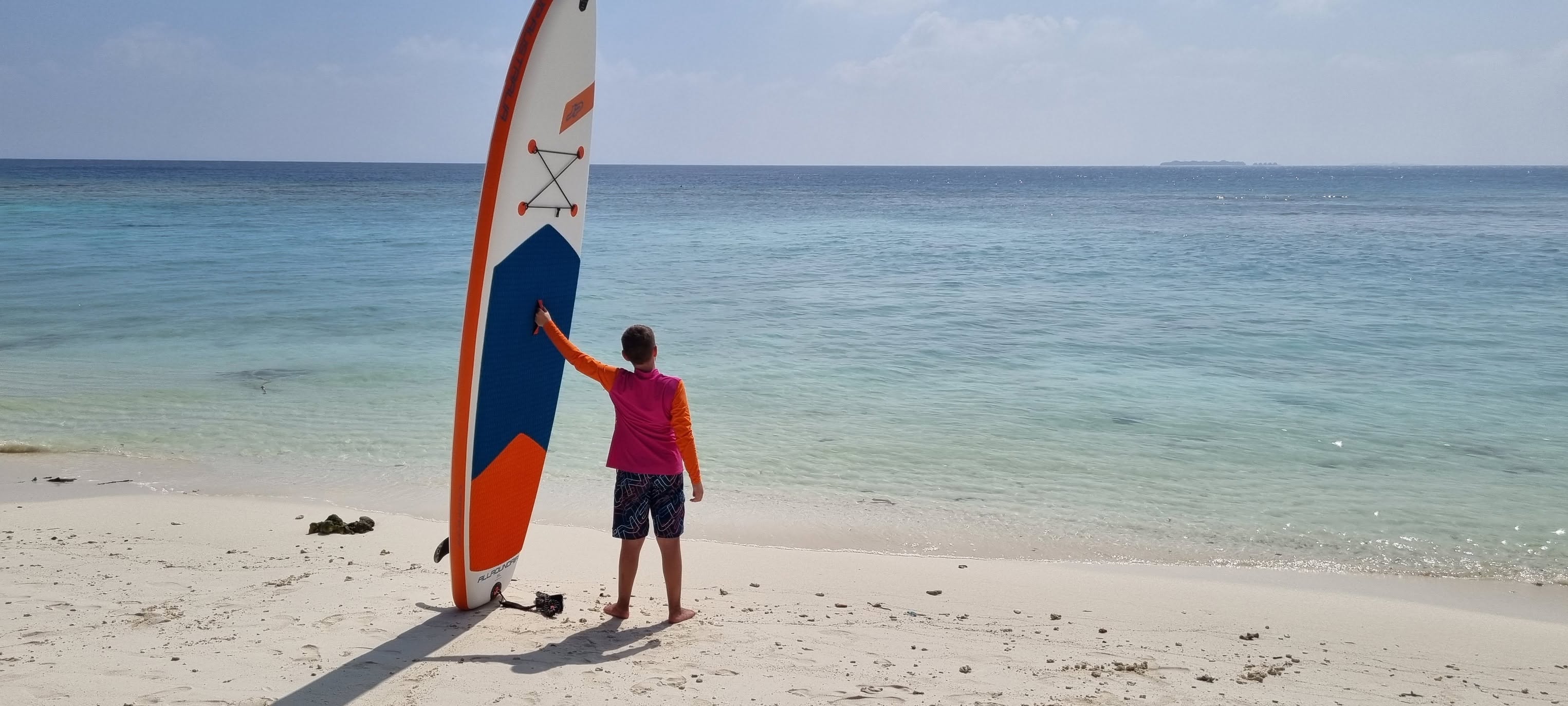
White coral sand, palms, incredible shades of blue, clear water… That is the Maldives. And the lovely thing is that this beauty is not reserved for guests at expensive resorts.

As far as the natural beach itself is concerned, choosing a resort or a local island makes very little difference.
The ocean does not know how much you paid for your hotel. :)
Of course, beaches differ from island to island. One has a long, wide stretch of sand; another is narrow. Some have plenty of natural shade from trees; elsewhere, you have to hunt for it. One beach has a gently sloping sandy seabed, perfect for swimming; another may have coral fragments, stones or stronger currents.
Maintenance differs too: a resort may provide loungers, umbrellas, daily cleaning and all kinds of comforts. But those are services. The natural beauty itself is not necessarily greater.
You may find a magnificent beach on a local island that is every bit as good as one at a luxury resort. Or you may pay a lot for a hotel on an island whose beach simply does not suit your tastes.
So look at the island and beach first, then the hotel's stars.
The reef — the real treasure is underwater
If the beach is what you see in the advertising photos, the reef is what, in my view, makes the Maldives worth returning to.
You put on your mask, dip your head under and suddenly enter another world. Literally. Corals in incredible shapes, fish in every colour, shoals moving like one enormous living creature. And, if you are lucky, a turtle, a ray or a reef shark calmly going about its business without the slightest interest in you.

And sometimes all of this is just a few metres from the beach.
There is something very important I want to emphasise here:
The quality of a reef is not determined by whether the island is a resort or a local island.
It depends above all on natural features: the island's location, the structure of the coral reef, depths, currents, coral condition and the variety of marine life. Human activity can affect it too, of course, sometimes quite badly.
You may be staying at a luxury resort with a beautiful lagoon, yet find mostly sand on the seabed near the beach. For good snorkelling, you will need a long swim or a boat.
On another island, with ordinary little hotels, just a few kicks of your fins may bring you over a beautiful living reef.

So a more expensive hotel does not mean a better reef. Sometimes quite the opposite.
What is a house reef, and why does it matter so much?
A house reef is the reef right beside an island that you can swim to without a boat.
For me, that is a huge advantage. I can get into the water whenever I like, without waiting for an organised excursion. Morning or afternoon, for half an hour or two — depending on my mood and the conditions. Even in the rain, as long as there is no storm.
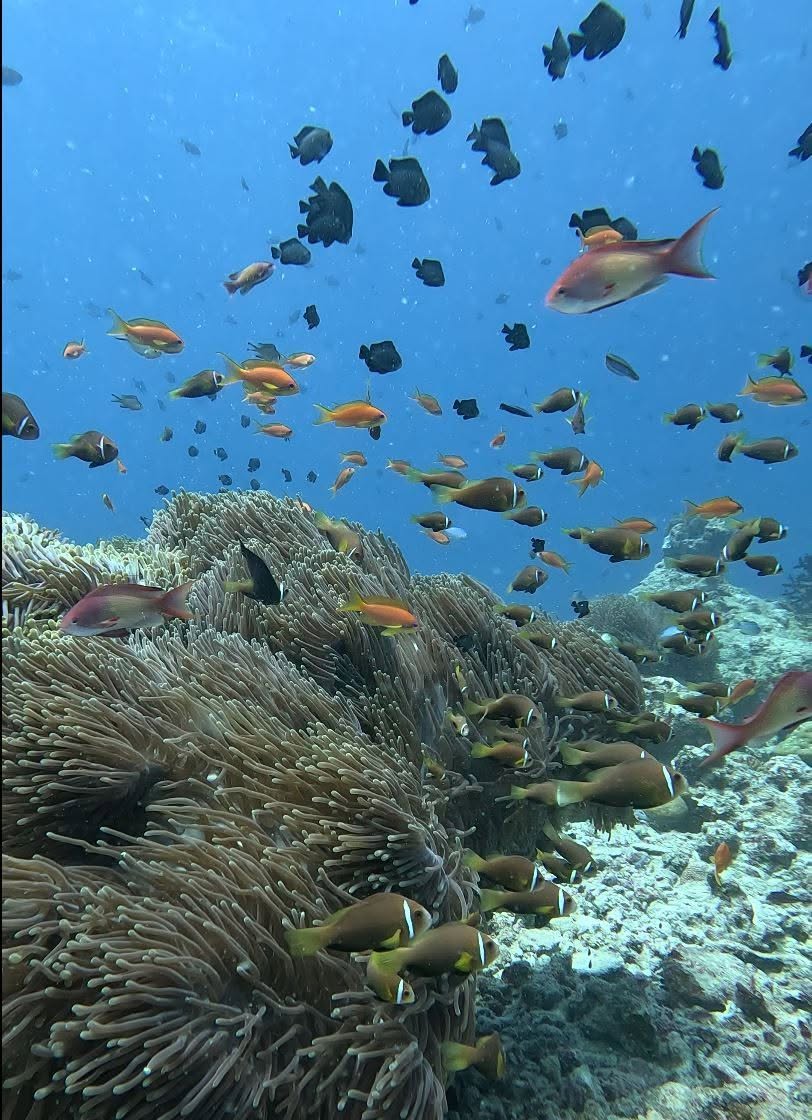
But it is not enough for a description to say that an island “has a reef”. Almost all Maldivian islands have coral formations around them. The question is how close the good reef is, how alive it is, what you can see there, and how accessible and safe it is to swim to.
On some islands, the reef begins very close to shore. On others, a vast shallow lagoon lies between the beach and the reef. It may be wonderful for photos and bathing, but not necessarily for watching marine life.
There is another thing: a beautiful reef is not always easy to reach. Currents and waves need to be considered too. Find safe entry and exit points, and do not go alone in strong currents. Do not stand on or touch the corals.
I have also devoted a separate article to this: “Why is it so important to know whether an island has a house reef?”
Where can we swim in swimwear?
There is one feature of local islands you should know about beforehand.
The Maldives is a Muslim country, and inhabited islands have certain dress rules. Visitors are usually provided with designated beaches called bikini beach, where you can comfortably wear your usual swimwear.
On some islands, these areas are fairly small. On others, they are extensive and cover much of the attractive beachfront.
Ukulhas is a great example of the latter. The tourist area covers a large part of the beach, giving you much more freedom to choose your spot.
Outside designated beaches, including on island streets, you should respect local dress rules. In Malé and Hulhumalé, do not assume that every public beach allows swimming in swimwear either: check the signs, as breaking the rules can lead to penalties.
This is one difference between staying at a resort and on a local island. But I do not think it is a reason to rule out the latter. It is simply something to know when choosing.
In brief:
Do not choose an island just from the hotel photos.
Look for photos of the beach itself. See how long it is, whether there is shade, what the seabed is like, and where swimwear is allowed. And definitely check the reef.
Because the best part of your holiday may turn out to be the one that cost you not a single extra euro.